Other Courses

1) Drawing class: youth animation class, portfolio guidance
2) Public speaking
3) Aerospace and Astronomy
4) Computer programming

Speaking of painting, many people still have doubts, why should they learn painting? What can painting do in the future? Painting is one of the fine arts. Some parents have some narrow ideas about studying fine arts. They think that if you study fine arts, you will only be a painter in the future, and won't be able to do anything else.
In fact, this concept has long been outdated. Learning to paint is not only to cultivate hobbies, but also helps children improve observation, imagination, creativity and concentration. It improves IQ, EQ, cultivates self-confidence, improves temperament and so on. The art major involves all aspects of life. Here are the "high-end professions related to art": industrial designers, architects, fashion designers, graphic designers, photographers, jewelry designers, interior designers, landscape designer, furniture designer, display designer, advertising designer, game designer, illustrator, environmental design, interior design, costume design, jewelry design, animation professional design, etc.
1) Flat animation course (7-10 years old, 10-14 years old)
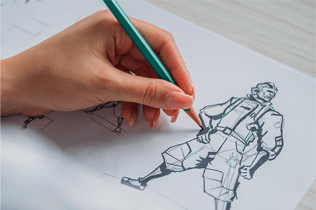
Course use equipment iPad, apple pencil, and use procreate software to create. The animation course attracts children and adults with its concise, humorous characters and rich and interesting storylines.
This course will introduce animation characters of different styles and teach the basic principles of animation character modelling.
Course Description
- Learn to use procreate software;
- Learn the proportion, structure and perspective of cartoon characters;
- Learn how to express anime characters;
- Learn the clothing design of cartoon characters;
- Learn to make GIFs and small animations.
2) Portfolio counseling course (undergraduate, graduate)
For students who want to apply for Canadian and American art universities
Direction: painting (oil painting, illustration, etc.)
Canada and the United States are the countries with the highest quality of education in the world. They have the most developed art industry in the world, as well as many art colleges and universities, with a high degree of professional popularity. Sheridan College, OCAD University, Emily Carr Institute of Art & Design in Canada, Rhode Island College of Art, Art Institute of Chicago, and New York School of Visual Arts are popular among students and have always been popular colleges.
In addition to English scores, one of the most important materials to prepare for applying for an art major is the portfolio. A portfolio of pure art undergraduate and postgraduate works generally requires 10-20 works, which reflect the students' hand-painting ability, creativity, aesthetic taste or depth of thought. Some colleges and universities require the submission of proposition creation and process drafts.
Course Description
- According to students' personal wishes, study habits, and existing works, we recommend specific colleges and universities to students;
- We help students analyze, plan and formulate portfolio plans;
- We provide guidance to students throughout the process of determining the theme of the work, researching and finding materials, and layout. Give timely feedback during the creation of each work;
- We instruct students to write artist statement and work information;
- If the applicant school has an interview requirement, we provide interview guidance.


Have you found that those around you who can speak up are more popular and appreciated by leaders?
Have you found that there are some people who are steadfastly delving into technology without showing up, and outstandingly fulfilling the tasks assigned by the leader, but have not received the attention or success they deserve?
Have you found that some people whose work ability is not as good as yours, but they rely on good communication skills to effectively express their various ideas, making them more favored by leaders? Effective communication has added a brick to their lives, making them go further and succeed more easily.
Speech is an important part of communication. Speech can cultivate self-confidence, exercise writing and expression skills, and build prestige.
Public speaking is a skill, not a talent. Almost no one is a born orator. Even Churchill and Clinton have gone from their initial stressful, embarrassing and disappointing speech experience to becoming recognized outstanding speakers.
In today's society, the competition is fierce, and speech and communication skills are becoming more and more important. We should let our children develop these abilities in their adolescence, so that they can increase their competitiveness in the future without hurry and help them become the best among all living beings. At the same time, teenagers are very malleable. Speeches can tap their potential, enhance self-confidence and build leadership.

Course Description
- Learn how to enrich and improve the content and structure of a speech;
- Learn how to effectively use voice (voice-e.g. pace, pitch, pause) and body language (e.g. posture, gesture);
- Learn how to understand the audience and meet their psychological needs (audience analysis);
- A lot of practice.

Whether it is now or in the future, space exploration has long-term significance for human development and self-growth. For children, the meaning of space exploration to them is far less complicated and profound. Their curiosity and yearning for space seem to be innate.
In the movie "The Wandering Earth", Liu Peiqiang takes his son Liu Qi to watch the stars and the moon
"How big is the universe we live in?"
"Jupiter is so dangerous, why should the earth be close to Jupiter"
"Can we live on other planets?"
Children always have various questions about space. As parents, it seems difficult for us to answer them in a professional and interesting way.
Based on this, the Science Captain launched a space-themed online course to take children to explore the secrets of space.

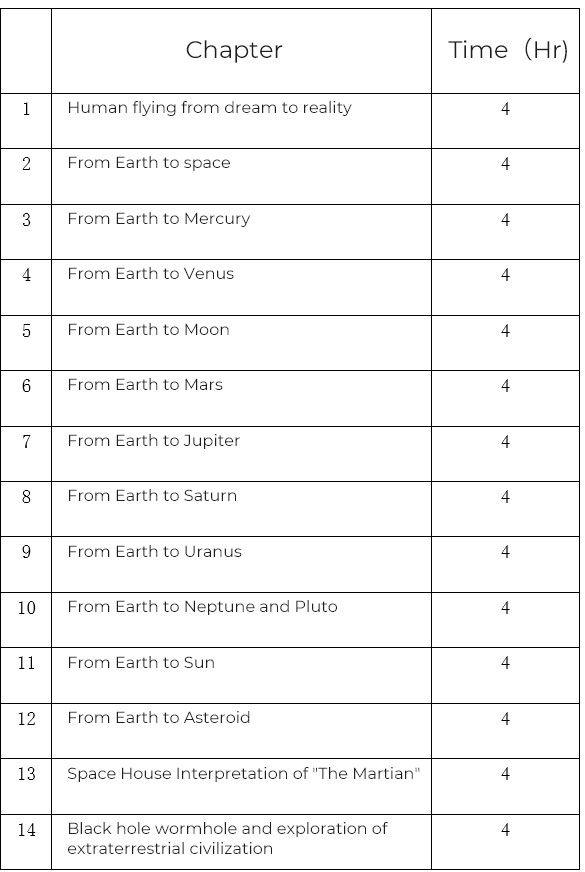
Course: "I Came from the Earth"
Course introduction "I'm from the Earth" course integrates knowledge, fun and observation experiment, which can make you understand space culture, enlighten wisdom, broaden your horizons, and stimulate children's scientific exploration while enjoying space knowledge and astronomy knowledge. It develops the enthusiasm and courage to challenge yourself!
The course "I Came from the Earth" starts from the birth of the solar system. It explains scientific facts about the sun, planets and asteroids. It introduces famous scientists who have influenced the world, shares the culture of space exploration, and more. Deeply understand the feelings of the philosopher Kant: "There are two things in the world that can deeply shock people's hearts. One is the lofty moral code in our hearts, and the other is the brilliant starry sky above us.”
Welcome students to start a space journey, to appreciate space culture and planetary culture, and to look at the stars!
This course has three levels (beginner, intermediate and advanced), which correspond to children aged 10-18 (grade 1 to 8 children).
Course Description

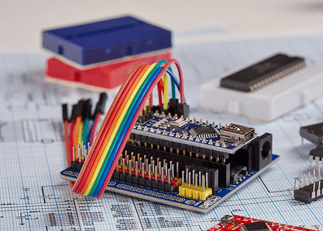
The Arduino hardware platform already has a complete experimental teaching framework system. With its rich sensors and input and output modules, only simple hardware connections can quickly achieve interesting interactive experiences. This is not only conducive to students learning computer programmers, but also conducive to training students to have the thinking and character of an engineer. The characteristic of this course, and difference from similar courses in other schools, is that the course is based on the industry culture of spacecraft, space stations, satellites and rockets, and lays the foundation for your child to become an aerospace engineer.
This course is graphical programming-small programming with great wisdom: start with understanding Arduino application cases, let students understand the application of Arduino in life. The case of the course uses Arduino's "perception" and "action" as the starting point, and select commonly used Sensors. It explains profound theories in simple language so children learn while playing. It explains the hardware knowledge and programming ideas behind them. The graphical programming software is used in programming the course. Bid farewell to boring code and make programming as simple as building blocks as you quickly realise it is an intelligent application. Students can design and debug some intelligent equipment by themselves, such as sound-controlled desk lamps, automatic obstacle avoidance cars, and intelligent anti-theft and alarm doors and windows.
This course is divided into 4 parts, with a total of 16 class hours. With 2 class hours per week, 8 weeks of study time, this course has a total of 2 test exams (midterm exam and final exam), complete exam assignments on time, and qualified students can get Certificate of completion.
This course has three levels (beginner, intermediate and advanced), which correspond to children aged 6-9, 10-12 and 13-15 (children from grade 1 to grade 8).
Course Description
The first part, the first white: first getting to know Arduino and Mi Siqi (2 class hours)
- Know the core processor of Creative Electronics
- Feel and manipulate the beauty of lights
Part Two, Climax: Introduction to Sound, Light and Arduino (4 class hours)
- The Big Dipper Lecture 1
- The Big Dipper Lecture 2
- The Big Dipper Lecture 3
- Dongfanghong in space
Part Three, Interlude: Getting to Know the Sensor and Advanced Arduino (6 class hours)
- Spacecraft attitude control system
- Spacecraft LCD temperature display
- Cube star's fill light
- Space telescope and life detection
- Remote control steering of Mars rover
- Remote control radar and stringless Liuyin piano
Part Four, Final Chapter: Preliminary Comprehensive Application of Arduino (4 class hours)
- Mars rover driving
- China's ruler-Beidou Navigation